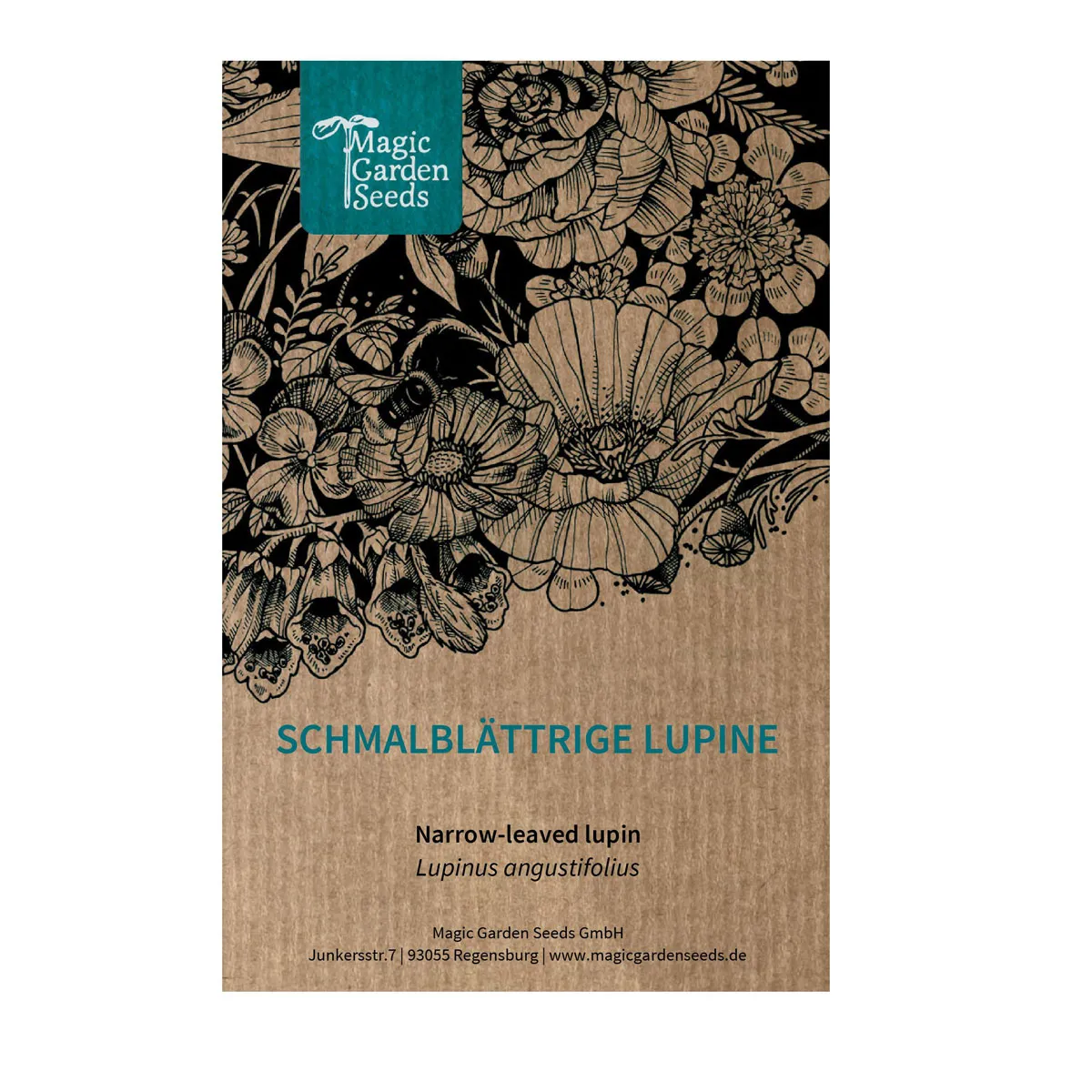
Lupino a foglia stretta (Lupinus angustifolius) semi
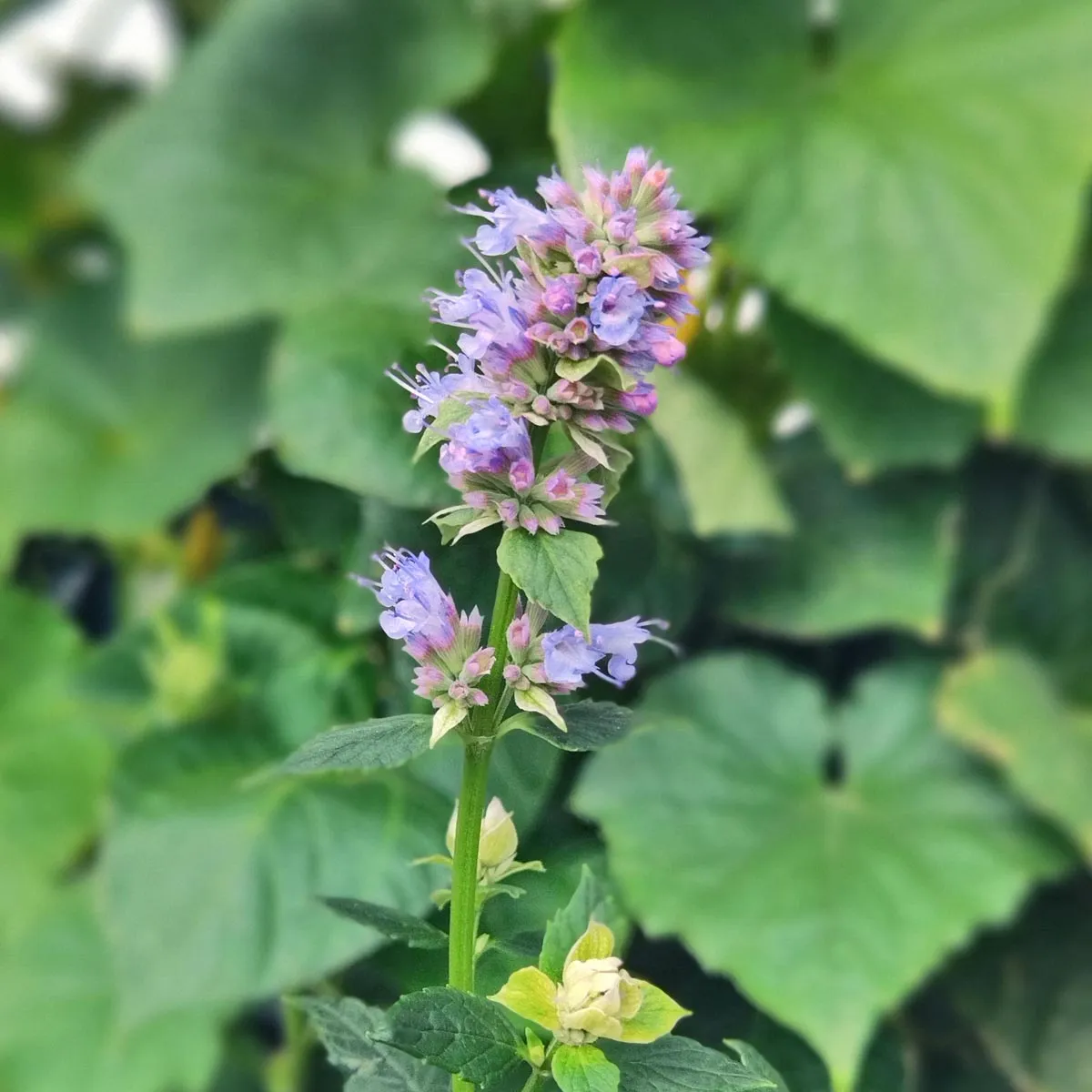
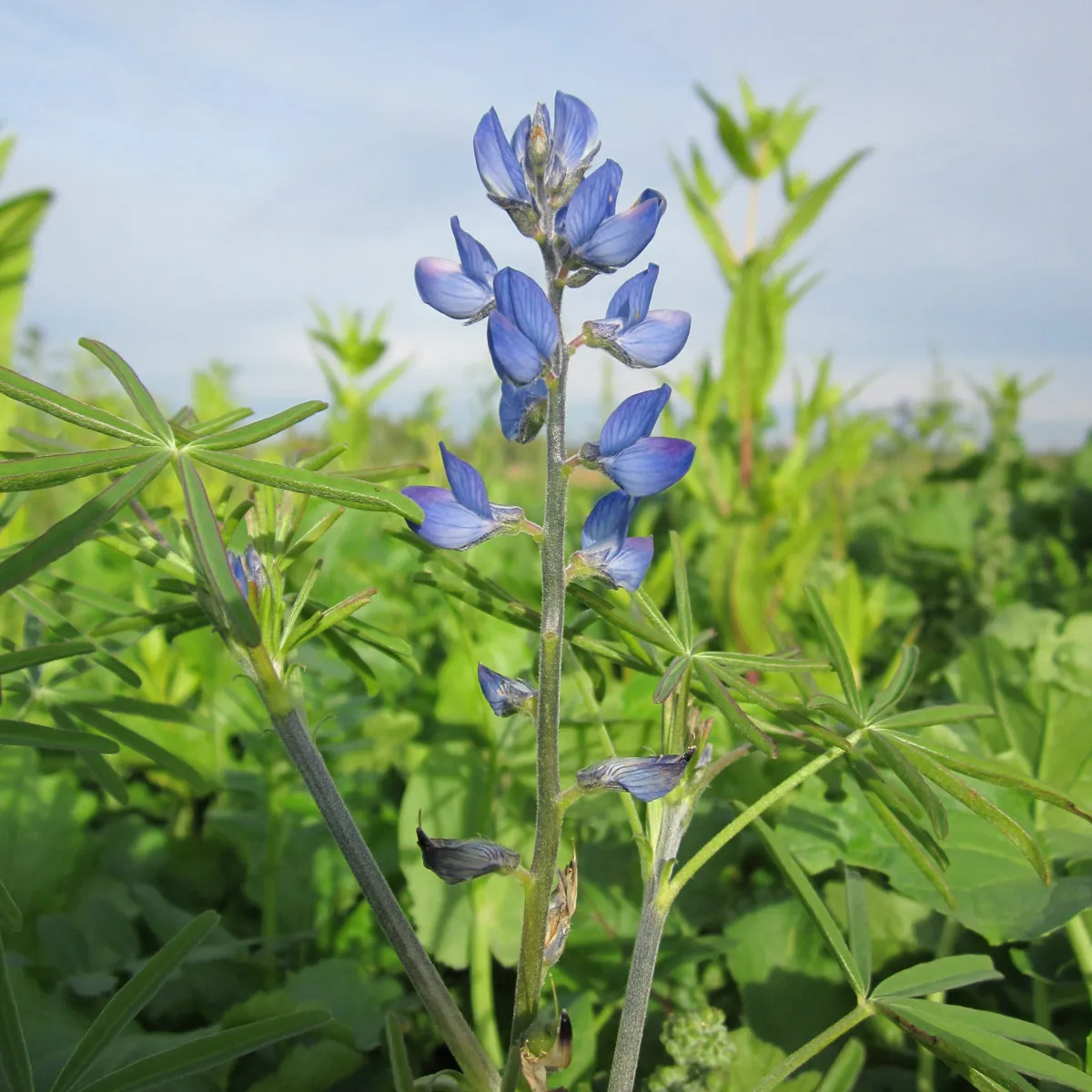
- Stunning floral display – with intensely blue flowers that attract bees, bumblebees and other pollinators.
- One packet (20g) is sufficient for approximately 2 m² – ideal for small garden beds or raised beds.
- Natural soil improver – enriches the soil with nitrogen and promotes a light, fertile structure.
2,39 €
Descrizione
Versatile legume for soil improvement and as an attractive forage plant for bees
The narrow-leaved lupin (Lupinus angustifolius) is an ancient cultivated plant native to the Mediterranean region. As early as antiquity, it was valued for its ability to improve soil and fix nitrogen. Today, it is considered a valuable green manure crop that restores depleted soils while its vivid blue flowers attract numerous pollinators such as bees and bumblebees. Its dense, brightly coloured flower spikes also bring striking highlights to beds and fields, making it one of the most attractive green manure plants available.
As a legume, it naturally enriches the soil with nutrients, making it an ideal companion for sustainable gardening and agriculture. In addition to its ecological value, narrow-leaved lupin is also used in agriculture as a protein-rich fodder crop. Its deep taproots break up compacted soil and contribute to long-term improvements in soil structure – a plant with history and many virtues.
Use in raised beds
Narrow-leaved lupin also performs exceptionally well in raised beds: its deep roots help loosen the soil and ensure good aeration of the growing medium. At the same time, it sustainably enriches the substrate with nutrients through its nitrogen-fixing ability. After flowering, the plant material can simply be dug in to add valuable organic matter. In this way, lupins support long-term soil fertility in raised beds – ideal as a natural green manure between vegetable or herb crops.
Scheda della pianta
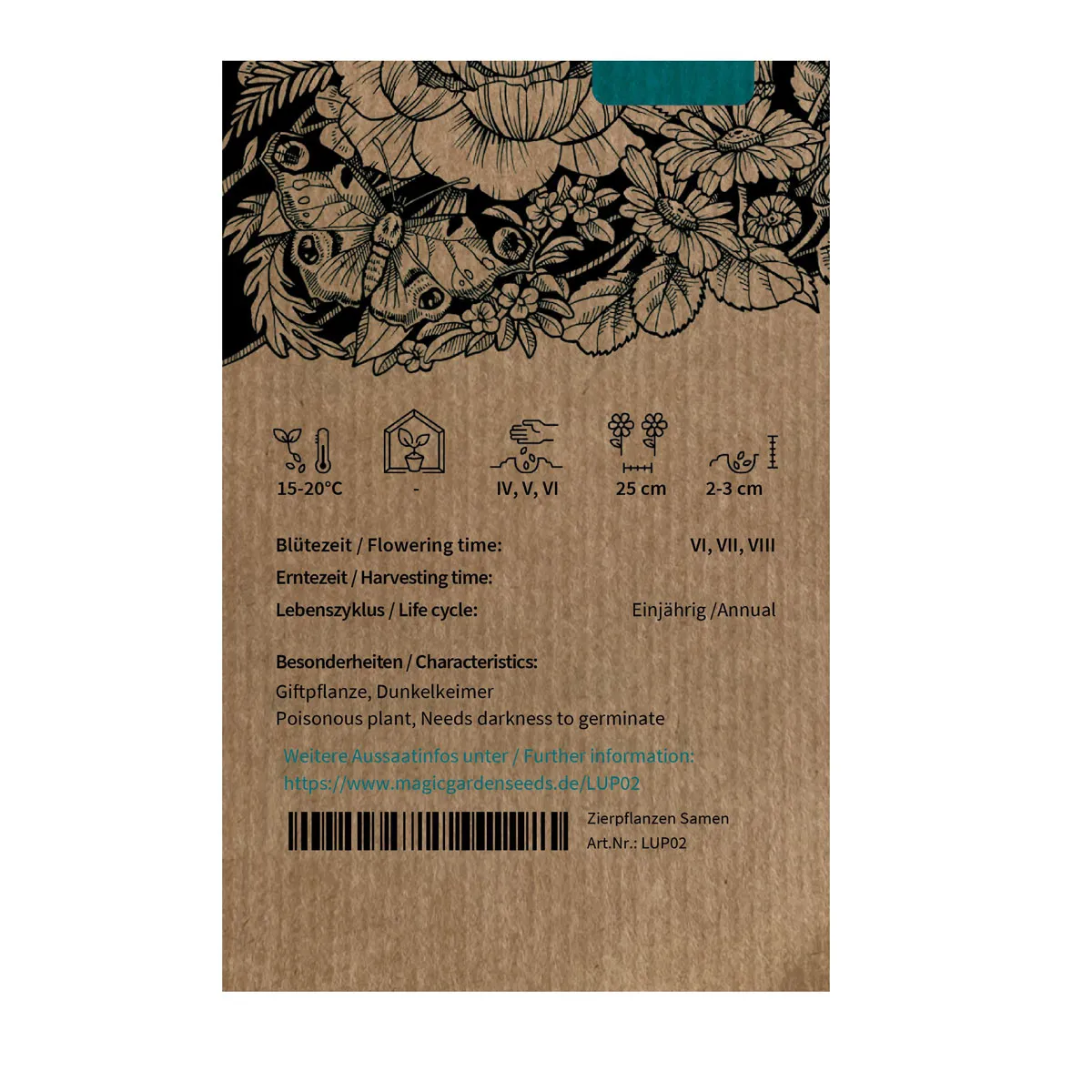
| Classificazione delle piante | Fiore estivo |
|---|---|
| Utilizzo | Buona fonte di nutrimento per gli insetti, Pianta ornamentale, Pianta utile, Sovescio |
| Ciclo di vita | Annuale |
| Genere | Fabaceae |
| Propagazione dei semi | Produzione convenzionale |
| Regione d'origine | Regione mediterranea |
| Caratteristiche | Ha bisogno del buio per germogliare, Pascolo per le api, Pianta velenosa |
| Altezza della pianta | 40-80 cm |
| Colore dei fiori | Blu |
| Periodo di fioritura | Agosto, Giugno, Luglio |
| Apparato radicale | Fittone |
Consigli di coltivazione
| Periodo di semina in pieno campo | Aprile, Giugno, Maggio |
|---|---|
| Profondità di semina | 2-3 cm |
| Temperatura di germinazione | 15-20°C |
| Tempo di germinazione | 1-2 settimane |
| Clima | Moderado |
| Tipo di terreno | Permeabile, Poco calcareo, Povero di sostanze nutritive, Profondo |
| Luce solare | Pieno sole |
| Fabbisogno idrico | Medio |
| Distanza di impianto | 25 cm |
Semina e cura
Sowing & Care
Sow narrow-leaved lupin (Lupinus angustifolius) outdoors from April directly into open ground. Choose a sunny position with light, sandy, and preferably low-lime (acidic to neutral) soil. Sow the seeds approximately 2–3 cm deep and cover lightly with soil. Consistent soil moisture supports germination. Once established, the plant is low-maintenance and thrives even in poor soils. After flowering, it can be incorporated into the soil as a green manure to retain nutrients.
Note on contents: One packet (20g) is sufficient for approximately 2m² of surface area.
Altri nomi
Nome botanico: Lupinus angustifolius
Tedesco: Schmalblättrige Lupine, Blaue Lupine, Futter-Lupine
Inglese: Narrow-leaved lupin, blue lupin, blue-flowered lupin,
Francese: Lupin à feuilles étroites, Lupin bleu
Italiano: Lupino a foglia stretta, lupino blu,
Spagnolo: Altramuz de hoja estrecha, altramuz azul, lupino azul,
Olandese: Smalle lupine, blauwe lupine,
Login